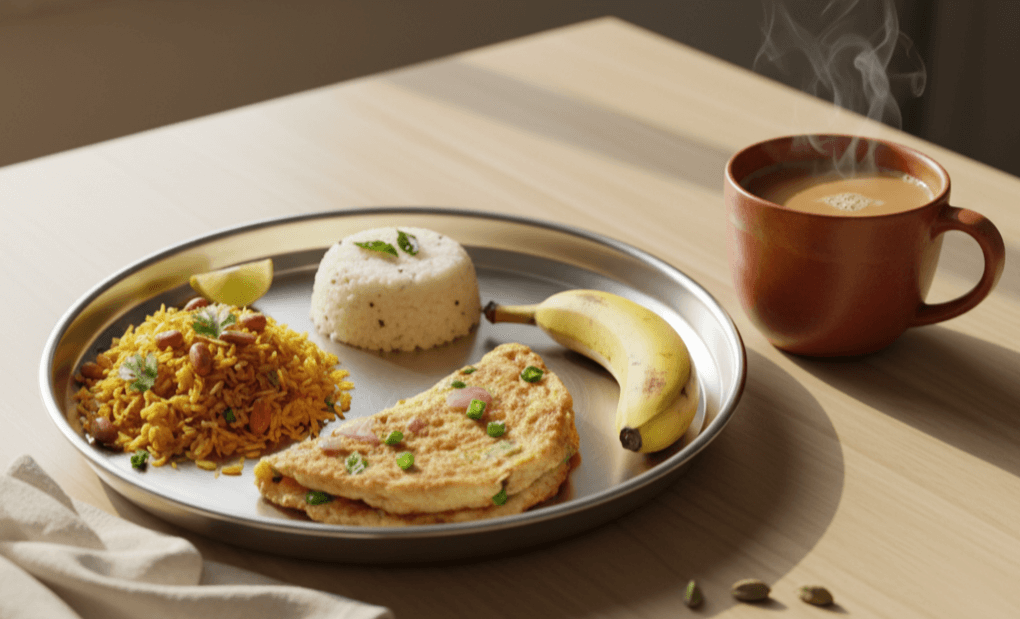
Some mornings don’t start softly. They start with alarms that ring too late, emails that arrive too early, and hungry stomachs that don’t care about schedules. Yet, in most Indian homes, breakfast still finds a way to happen — quickly, warmly, and often with ingredients already lying around. It’s why a 10-minute Indian breakfast doesn’t feel like a shortcut here; it feels like tradition.We didn’t invent “fast cooking” because modern life demanded it; generations before us were already doing it. Farmers had to leave at sunrise, factory workers rushed at dawn, children got ready for school without fuss. Indians built a culture of quick, comforting meals long before time pressure became fashionable.
Table of Contents
🍋 1) Lemon Poha: The King of 10-Minute Indian Breakfast
Comfort That Cooks Faster Than Tea
Poha isn’t a dish; it’s instinct. Rinse, drain, temper, toss — and it’s ready.
The simplicity comes from geography: rice grows abundantly in western and central India, and flat rice (poha) was an intelligent way to make it ready-to-cook. A sprinkle of lemon cuts through humidity, while peanuts offer protein and crunch. The dish is shaped by both climate and culture.
Fast Trick: Use roasted peanuts to avoid frying; add coriander only if you have it.
Why it’s perfect for busy mornings:
- no chopping required
- light on stomach, heavy on satisfaction
- works in humid climates due to low heaviness
lemon cuts through humidity, while peanuts offer protein and crunch. The dish is shaped by both climate and culture.
📌 Regional Reference: Maharashtra’s poha variations are documented in culinary tourism literature by India’s Ministry of Tourism (Food Heritage insights).
🥄 2) Instant Idli Upma: A 10-minute Indian Breakfast Miracle
When Leftovers Become Breakfast
Leftover idlis are a blessing in disguise. Just crumble them with your fingers, toss in a tempering of mustard seeds, chilies, and curry leaves, and you’ve made a soft, forgiving breakfast in minutes.
This dish exists because Indian kitchens value transformation more than waste. Steamed food lasts longer in tropical climates, making idlis ideal leftovers.
- Zero-Chopping Hack: Use sambar powder instead of fresh cut vegetables.
Why it works:
- uses yesterday’s food = zero prep time
- texture stays soft even after reheating
- easily tiffin-friendly for office/school
📌 Cultural Insight: South Indian “tiffin culture” is built around portability and speed — foods that travel well, cool well, and reheat easily.
🍳 3) Masala Bread Omelette: The 10-Minute Breakfast Express
India’s Fastest Street Breakfast
Served at railway stations, bus stops, and street carts, bread omelette is as Indian as it is adaptable. Add chaat masala for a Mumbai flavor, curry leaf tempering for a Southern touch, or chopped coriander for North Indian warmth.
This breakfast represents migration. Millions traveling for work needed something fast, cheap, hot, and handheld. Bread omelette answered that need.
- Tiffin Hack: Fold into a sandwich to keep it warm and spill-proof.
📌 Sociological Note: India’s railway breakfast culture has been documented in multiple travel and food journalism archives (e.g., National Rail Museum publications).
🥛 4) Dahi-Chura (Curd + Flat Rice) — No Fire, No Fuss
Popular across Bihar, Bengal, and Odisha, this dish is the definition of climate intelligence. Tropical heat demanded a breakfast that cools the body, reduces acidity, and doesn’t require cooking.
Just wash beaten rice lightly, mix with curd or milk, and sweeten with honey, jaggery, or banana.
- Cooling Add-Ons: banana, pomegranate, powdered jaggery, or soaked raisins.
📌 Ayurvedic Reference: Fermented foods and probiotic dairy are recommended for gut balance in warm climates (Charaka Samhita principles summarized by AYUSH documentation).
🌾 5) Besan Chilla — Protein in a Pan
Chickpea flour pancakes are India’s answer to fast protein. Just whisk besan with salt, turmeric, water, and (optional) chopped chilies or onions. It cooks golden in minutes and needs no fermentation, no soaking, and no precise measurement.
Copy code
- Protein Trick: Add curd to the batter to increase amino acid profile.
📌 Nutritional Note: Chickpea flour is naturally rich in protein and fiber (validated across Indian dietary research by ICMR and NIN).
⏱️ Extra-Quick Fixes for Really Rushed Days
These are not “hacks.” These are traditional shortcuts with cultural logic:
- banana + peanut chikki + milk (energy + satiety)
- leftover rice + curd + pickle (cooling + easy to digest)
- oats + hot water + sambar powder (surprisingly savory)
- toast + ghee + jaggery sprinkle (fast & warming)
Each one lasts because it works, not because it’s trendy.
💡 How to Make Indian Breakfast Truly 10-Minute
| Habit | Why It Matters |
| Roast nuts once a week | No pan time in the morning |
| Save leftover idlis/rice | Breakfast is half-ready overnight |
| Keep curd stocked | Climate-smart cooling food |
| Store chutney powders | Flavor without chopping |
| Keep one backup breakfast | No decision fatigue on tough days |
Morning food is not about cooking time.
It’s about planning for kindness tomorrow.
🌼 Final Thought — Fast Doesn’t Mean Thoughtless
10-minute Indian breakfasts are not quick because we are in a hurry. They’re quick because families learned to care efficiently. A bowl of poha, a leftover idli upma, or a chilla is less a meal and more a quiet message:
“Start gently. The world can wait for a few minutes.”
Let your morning be warm, even if your schedule isn’t.
Want to have more ideas of quick Indian recipes? Check out these breakfast ideas that pair well with these 10-minute Indian breakfast ideas.
Frequently Asked Questions
Q1. What is the fastest Indian breakfast to make?
Poha, bread omelette, leftover idli upma, and dahi-chura are ready in under 10 minutes.
Q2. Can 10-minute Indian breakfast be healthy and fast?
Yes. Besan chilla, ragi dosa mixes, poha with vegetables, and yogurt-based dishes are both nutritious and quick.
Q3. What 10-minute Indian breakfast is good for office mornings?
Folded egg-bread sandwich, dry poha boxes, or thin thepla rolls travel well, stay fresh, and are easy to pack.
Leave a Reply